
Coach. Strategist. Somewhat Anti-Guru.
I am a coach, facilitator, entrepreneur, writer and serial reinventer with a busy business brain, a short concentration span and an unreasonable appetite for simpler ways to do useful things.
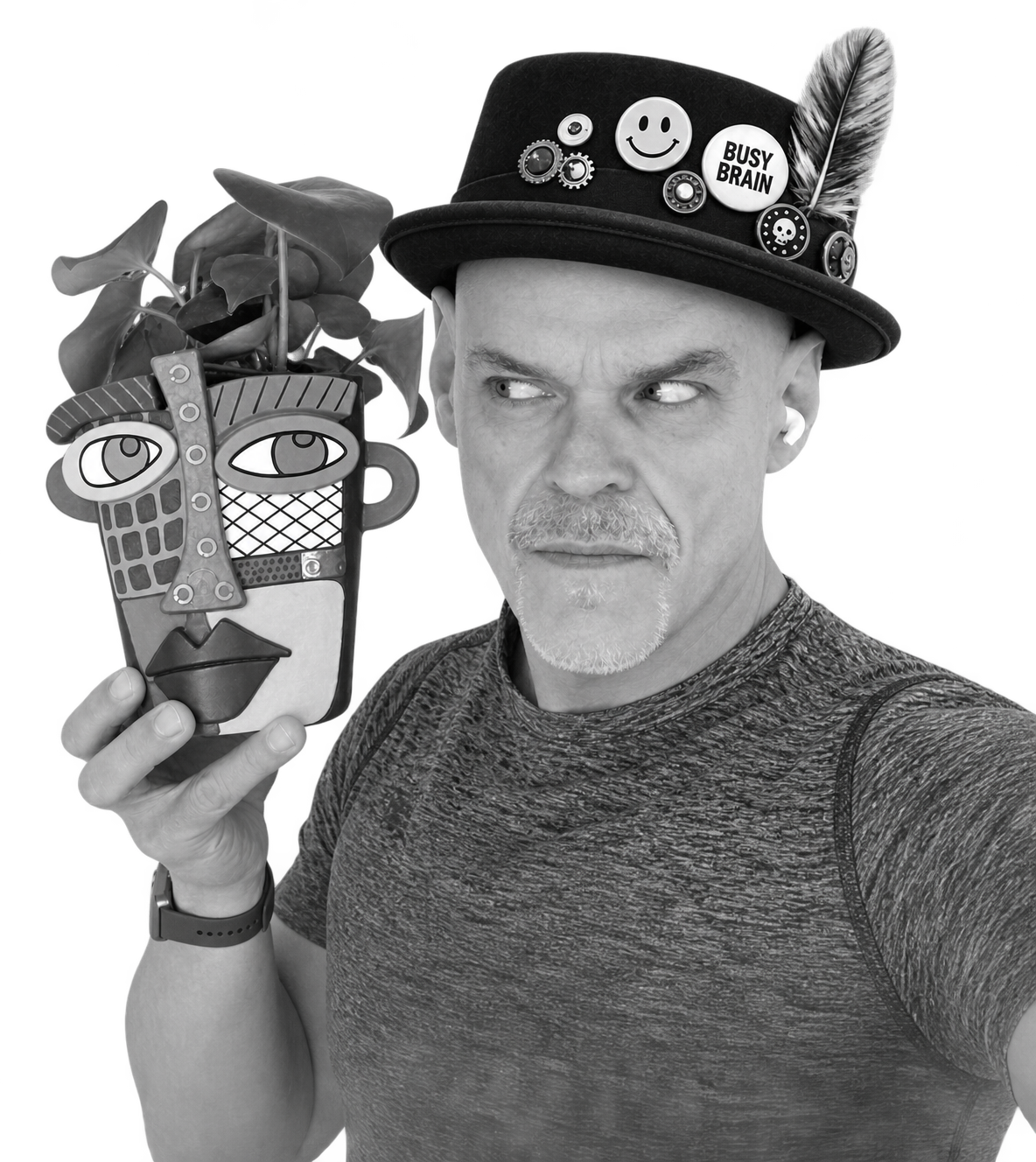
Hi. I’m Miles.
I call myself a NeuroEntrepreneur. You might be one as well.
My working life has included business coaching, entrepreneurship, facilitation, storytelling, writing, corporate training and more reinvention than any sensible career adviser would recommend.
The Anti-Guru bit matters. I am far more interested in helping you work out what fits than handing you another system and insisting you obey it.
I am particularly drawn to busy-brain entrepreneurs, leaders and late-career pivots trying to start, rebuild or run businesses without burning their lives down in the process.
These days, much of my work is about sharing the ideas, tools, methods and mistakes collected over thirty-odd years, while building NeuroEntrepreneurs into a place for people who want a business that actually fits.
By taking the scenic route. Repeatedly.
I have spent decades building businesses, losing businesses, coaching people through theirs and asking irritating questions about why smart people keep getting stuck.
There have been great successes and some catastrophic failures. One business failure in particular nearly finished me financially, emotionally and existentially.
I could have filed it under “character building” and pretended it had all been part of the master plan. Instead, I did the considerably less glamorous thing: I kept asking why.
Why do we resist the move we know matters? Why can intelligent people have all the information in front of them and still make a spectacularly unhelpful decision? Why do some systems work on paper and fall apart the moment an actual human arrives?
That habit became central to how I coach. The wrong explanation usually produces the wrong fix.
Business got more interesting when I stopped treating behaviour as a footnote.
Since around 2007, those questions have pulled me further into the messy territory where business strategy, psychology, behaviour and decision-making collide.
Mindset & human psychology
What happens before the spreadsheet: assumptions, fear, identity, attention and the stories we tell ourselves about what is possible.
Behavioural economics & influence
Why people rarely make decisions as neatly as business theory suggests, and how communication, context and persuasion shape what happens next.
Neuroscience, ADHD & divergent brains
Why some brains are brilliant at possibility, urgency and reinvention, while finding linear systems, repetition and administrative theatre considerably less charming.
Risk, reward & business decisions
How entrepreneurs navigate uncertainty, overload, competing priorities and decisions where there is no perfectly safe answer waiting to be uncovered.
Qualifications are useful. What you do with them matters more.
My formal study gave me frameworks. Business, coaching and a fairly stubborn curiosity gave me somewhere to test them.
NLP, hypnotherapy & influence
Including contextual approaches, conversational hypnosis and communication methods concerned with how people interpret, respond and decide.
ICF-aligned coaching
Coaching development through to PCC level, focused on useful conversations, responsibility and helping people create their own workable next moves.
Counselling psychology
A stronger understanding of human behaviour, emotional patterns, communication, and the reality that people are rarely just “resources”.
Business management
Including a Master’s degree in Business Administration with dissertation work focused on influence, behavioural economics and online decision-making.
The MBA dissertation that changed what I paid attention to.
The research was conducted at a leading South African e-commerce retailer, and several of my proposals were adopted by the business. It reinforced themes that have stayed with me: people need to be involved rather than merely instructed, communication matters, and humans are remarkably capable of making an unhelpful decision even when the information appears to be staring them directly in the face.
That dissertation was the last piece of “serious” academic writing I intended to do. Everything since has been tested in boardrooms, coffee shops, online calls, walks on the beach and, inconveniently, in my own life.
Smart people. Messy problems. No appetite for guru theatre.
I am not trying to be the right coach for everybody. The work tends to fit best when somebody wants a practical conversation, is prepared to question their own assumptions, and would rather build a useful strategy than perform personal development.
Too many ideas, competing priorities, inconsistent execution or a business that has started requiring more brain than you have available.
You have experience, capability and perhaps absolutely no desire to spend the next decade doing what worked for the last one.
Strategy, communication or decision-making is being slowed down by different brains, different assumptions and too many meetings trying to compensate.
You do not need to arrive with a beautifully organised problem.
Bring the messy version. The unclear decision. The business that has become harder than it needs to be. We can work out what is actually going on and whether I am the right person to help.